List of basic equipment for trapping
Equipment required for trapping vary considerably based on trap and set type, location, and target species. Here's a list of tools, materials, and basic supplies needed to set and run a trapline.
Transportation and storage
- Trap basket or backpack
- Vehicle suitable for terrain (e.g., ATV, truck)
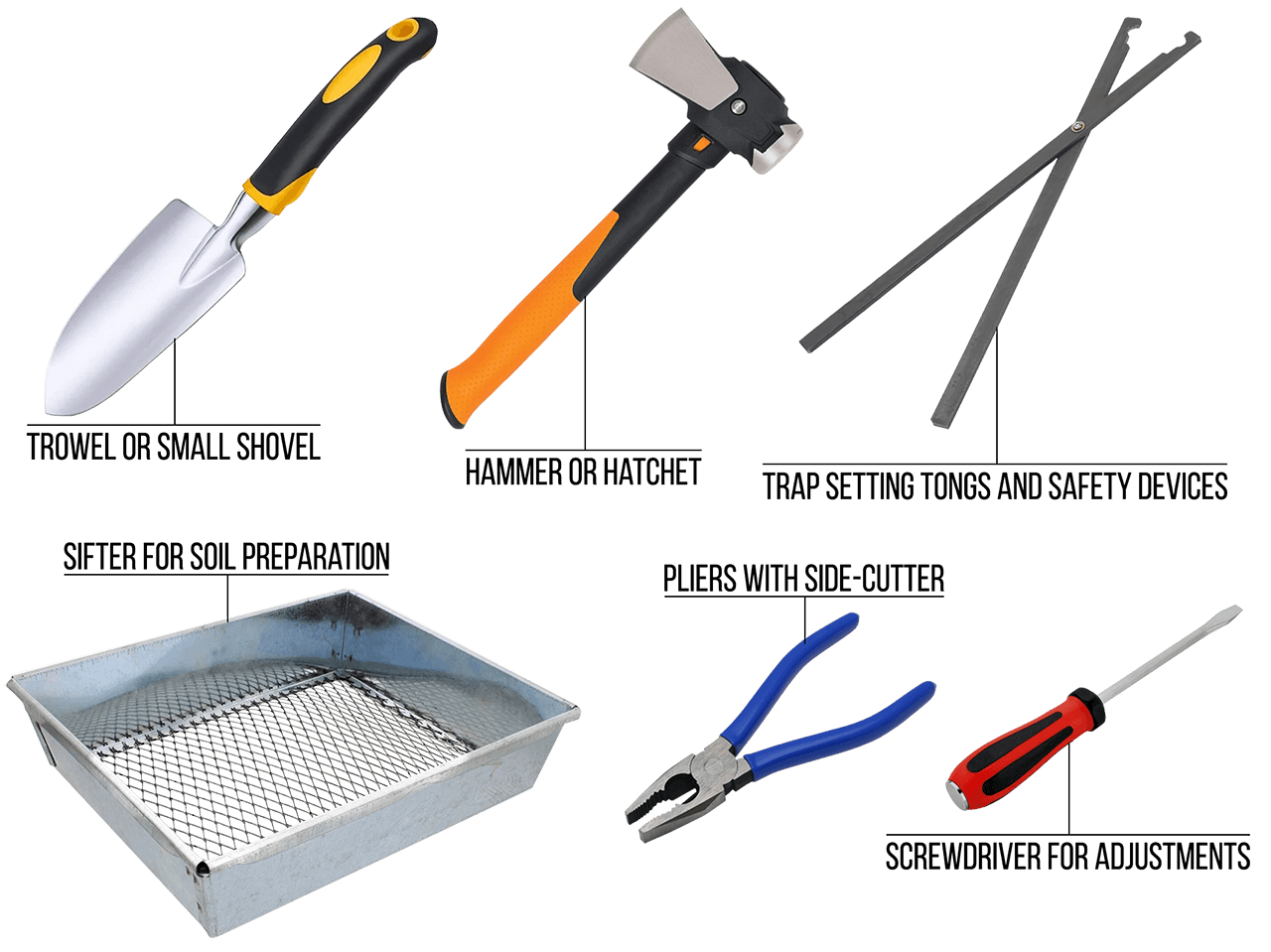
Digging and setting tools
- Trowel or small shovel
- Hammer or hatchet
- Sifter for soil preparation
- Trap setting tongs and safety devices
- Pliers with side-cutter
- Screwdriver for adjustments
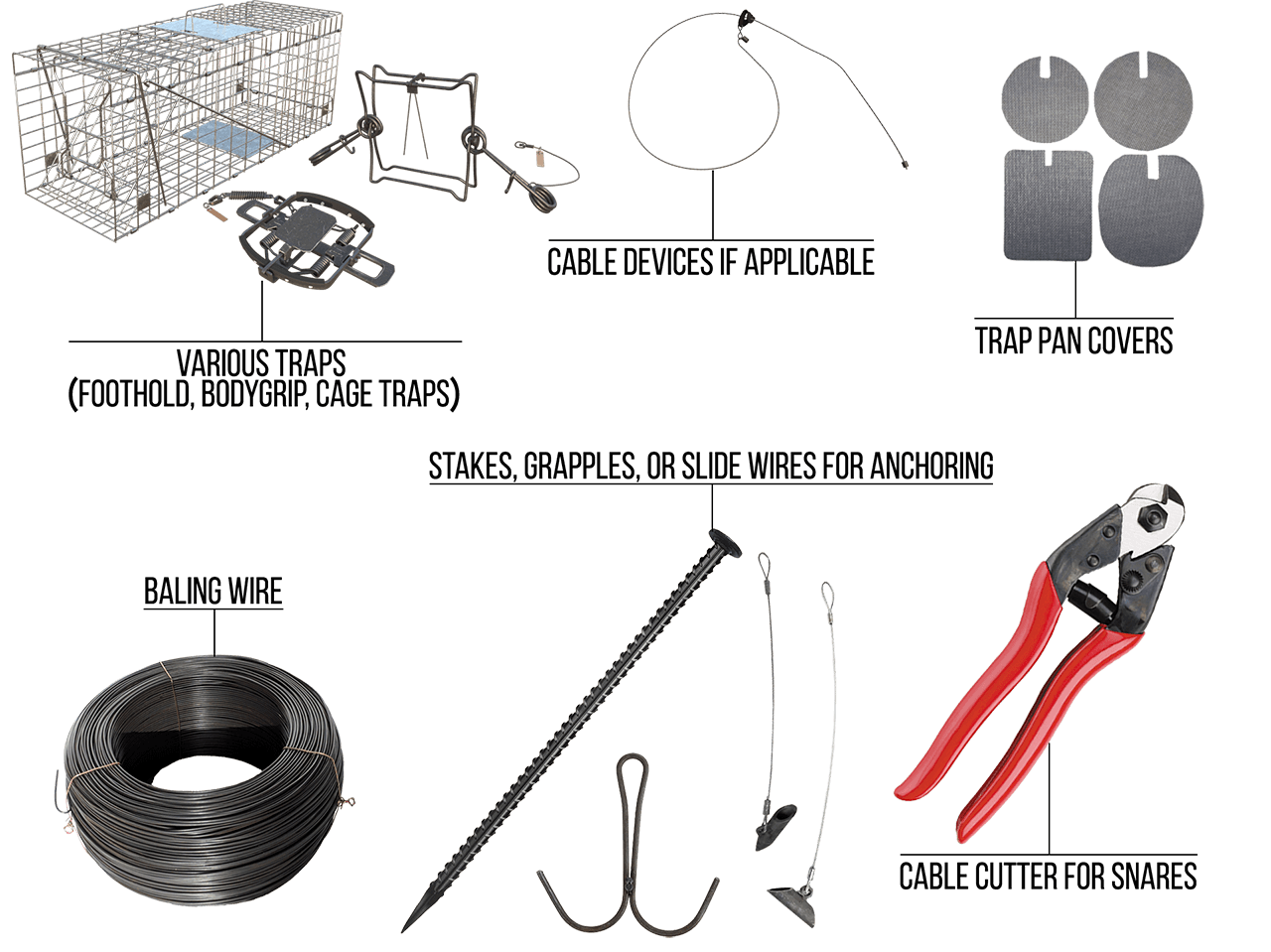
Trapping essentials
- Various traps (foothold, bodygrip, cage traps)
- Cable devices if applicable
- Trap pan covers
- Baling wire
- Stakes, grapples, or slide wires for anchoring
- Cable cutter for snares
Baits and lures
- Assorted lures and attractors
- Bait (fresh or preserved)
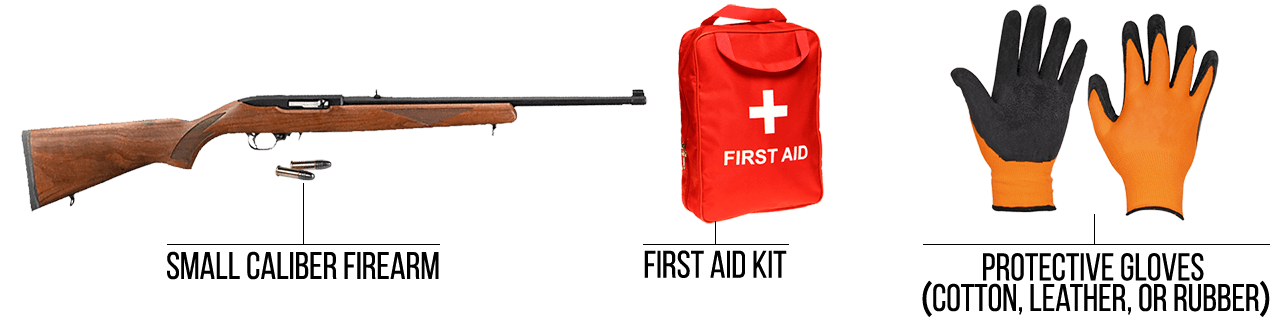
Safety and dispatch
- Small caliber firearm
- First aid kit
- Protective gloves (cotton, leather, or rubber)
Clothing and footwear
- Weather-appropriate attire
- Hip boots or chest waders for water trapping
- Extra set of dry clothes
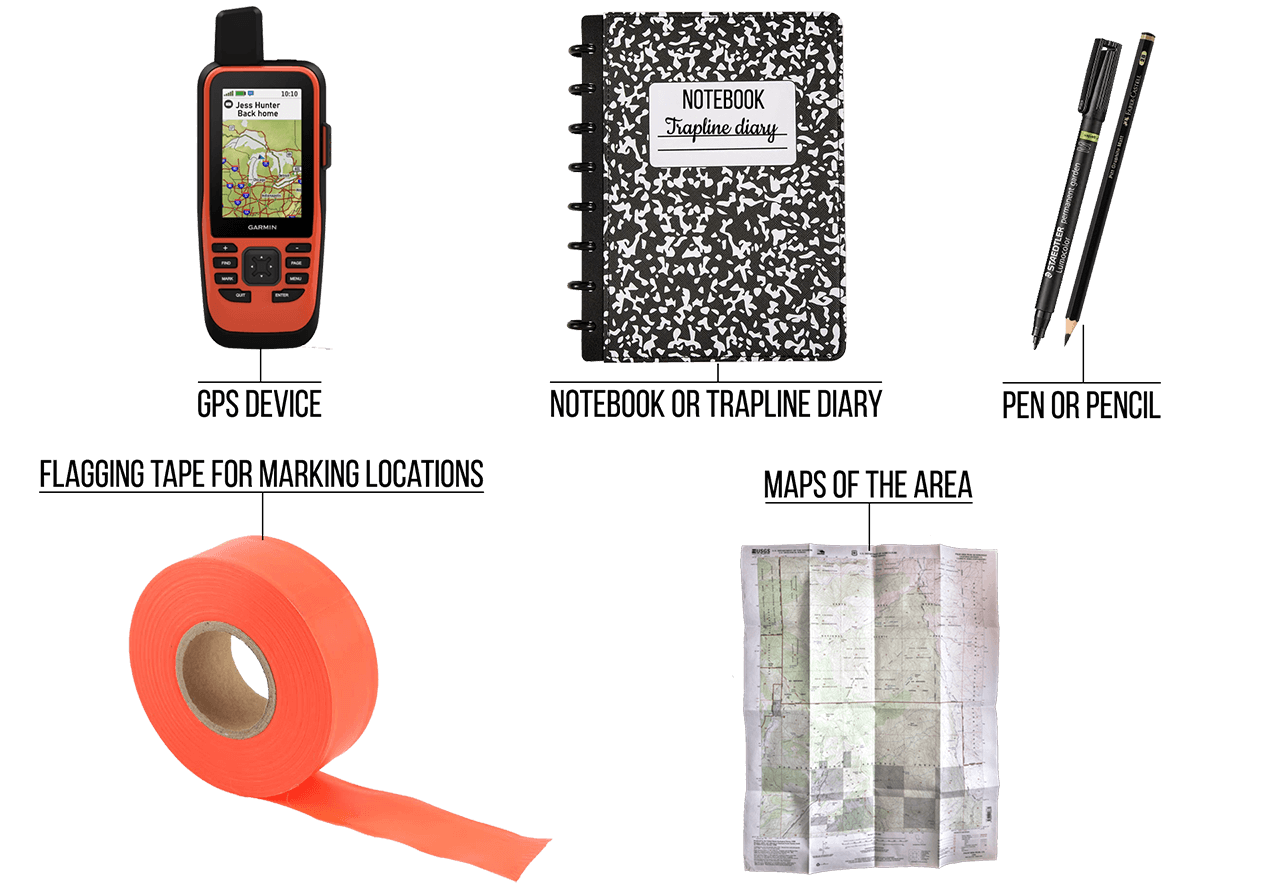
Navigation and documentation
- GPS device
- Notebook or trapline diary
- Pen or pencil
- Flagging tape for marking locations
- Maps of the area
Miscellaneous
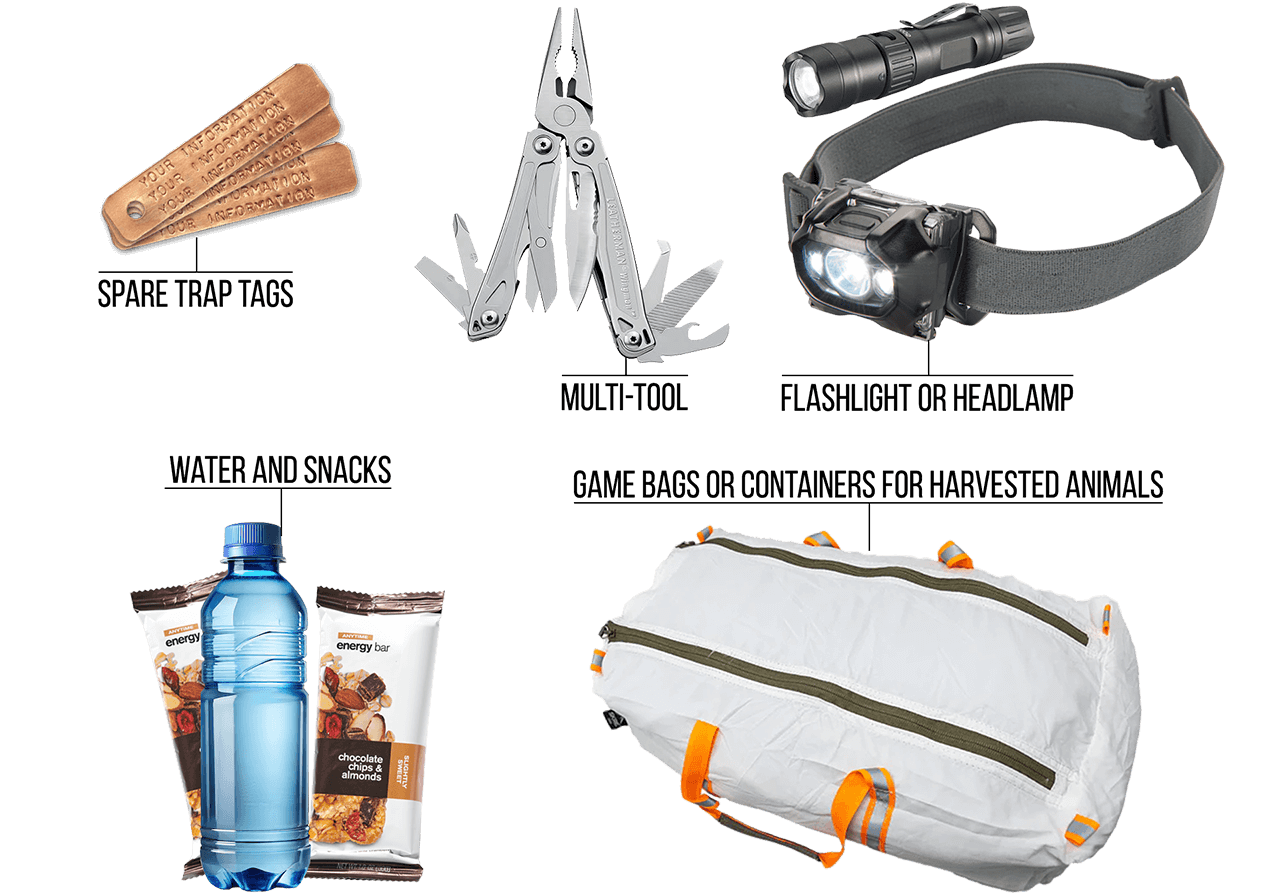
- Spare trap tags
- Multi-tool
- Flashlight or headlamp
- Water and snacks
- Game bags or containers for collected animals
Trapping attractors: lures, urine, and bait
Lures, urine, and bait are indispensable tools in trapping, each serving a specific purpose to attract target animals:
- Lures are scented substances designed to pique an animal's curiosity or mimic natural odors. They can be gland-based, food-based, or curiosity lures. Trappers use these to draw animals to the trap site.
- Urine from target species or their predators is often used in trapping. It can simulate territorial markings or create the illusion of another animal's presence, encouraging investigation by the target species.
- Bait is typically food-based and appeals to an animal's hunger. Common baits include meat scraps, fish, or sweet foods, depending on the target species.
Beginning trappers often look for a miracle lure that can attract animals from great distances, but such lures do not exist. Novice trappers must understand this limitation.
When used effectively, these attractants can significantly increase trapping success.
