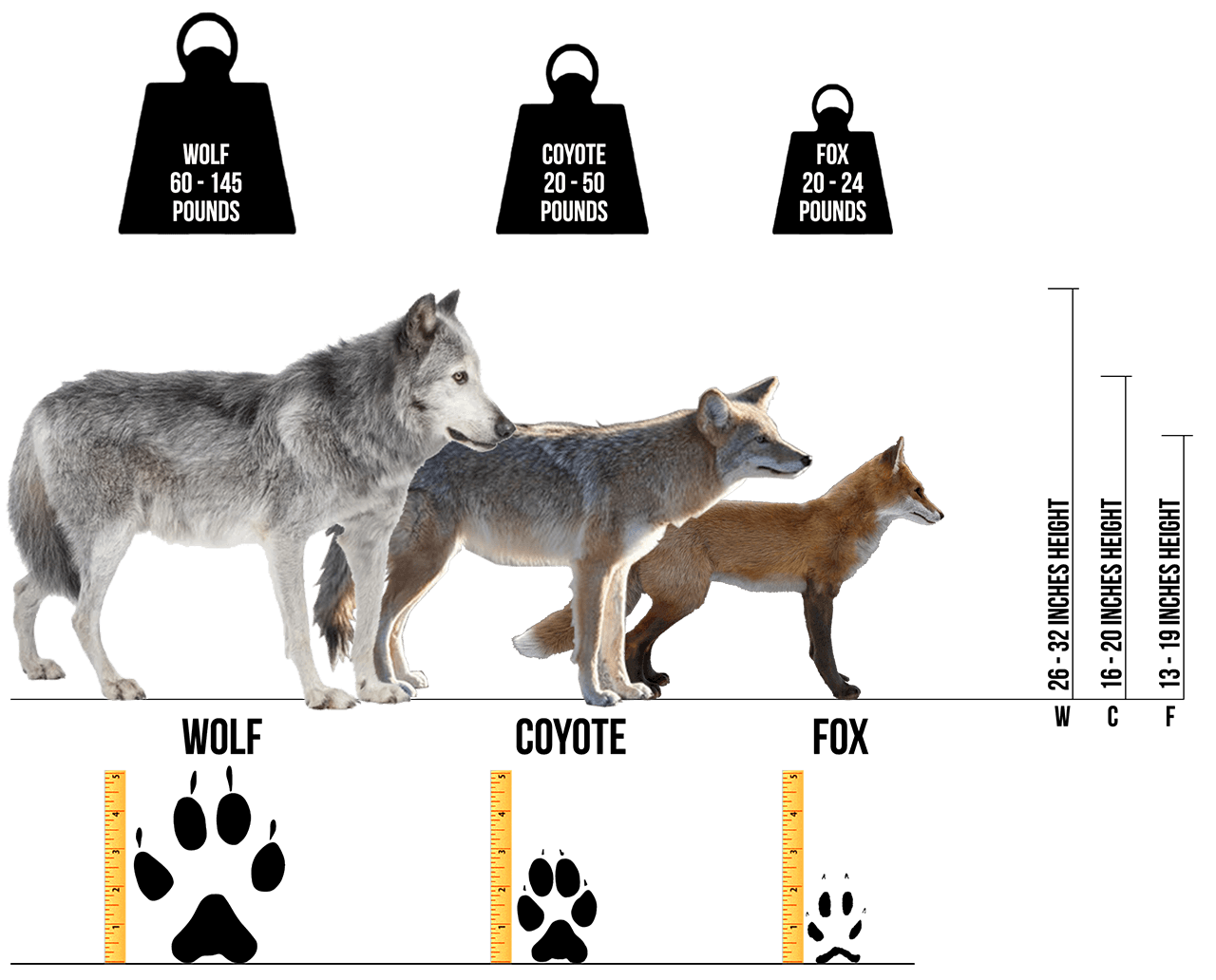
Furbearer species - Canidae
Canidae - Coyote
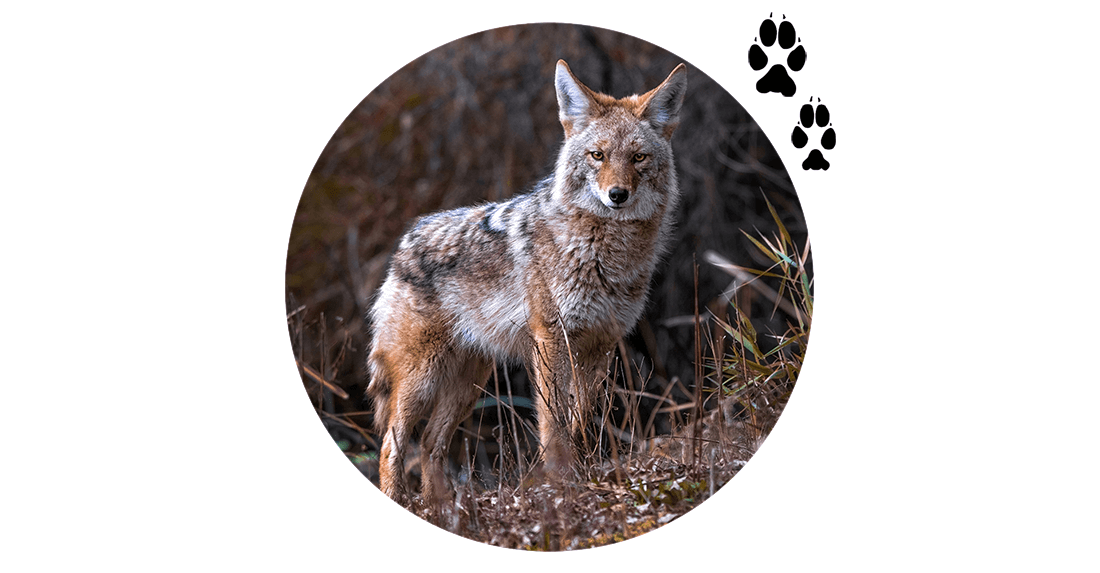
Coyotes look like medium-sized dogs. They are about 3 to 4 feet long, including their bushy tail. They usually weigh between 20 to 50 pounds. Their fur is mostly grayish-brown, but can vary in color. They have pointed ears, a long snout, and yellow eyes. Coyotes have a slender body and long legs.
Range and preferred habitats
They live in many different places including forests, mountains and even urban and suburban areas across North America.
Feeding habits, behaviors, and daily activity patterns
Coyotes are adaptable omnivores, feeding on a variety of foods. They hunt small animals such as rabbits, rodents, and birds but also consume fruits, vegetables, and even garbage in urban areas. While they typically hunt alone or in pairs, coyotes can also work in groups when targeting larger prey. These versatile hunters are most active at dawn and dusk, though they may be active at any time of day depending on circumstances.
Tracks, droppings, calls, and other signs
Coyote tracks resemble dog prints but are more oval in shape. Their droppings often include fur and bones, revealing their carnivorous diet. Known for their nocturnal howls, coyotes use vocalizations to communicate with one another. Their dens are usually tucked away in secluded, hidden spots for safety and shelter.
Canidae - Wolf
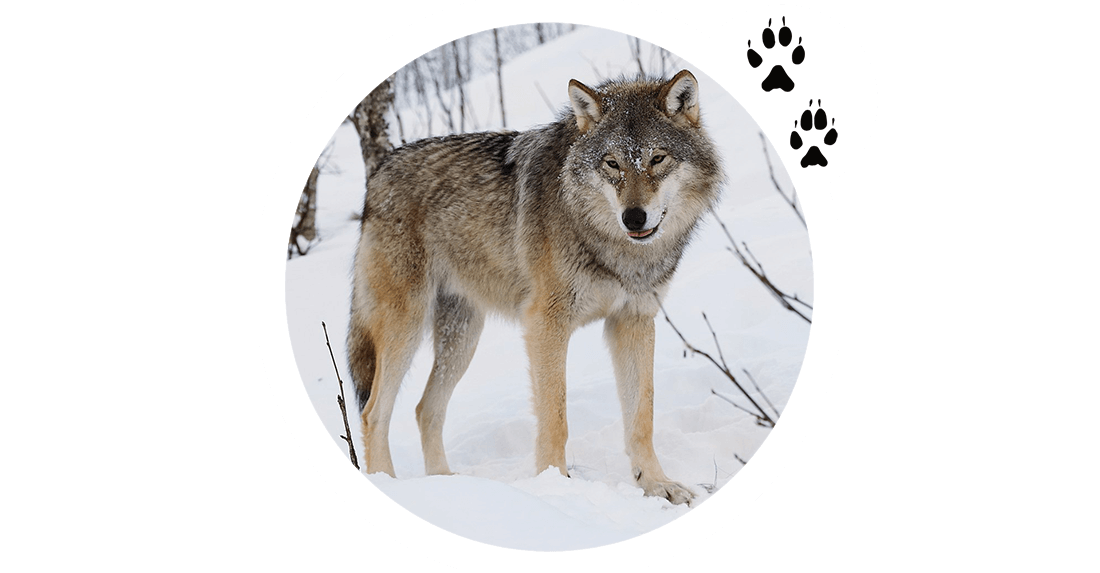
Wolves are large members of the dog family. They are about 4 to 6 feet long, including their tail. Usually weigh between 60 to 145 pounds. Their fur can be gray, brown, black, or white. Wolves have long legs and big paws. They have pointed ears and a long snout. Their eyes are often yellow or amber.
Range and preferred habitats
Wolves are found across a variety of habitats in the Northern Hemisphere. Their distribution varies by species and subspecies, but they typically inhabit areas with sufficient prey and minimal human disturbance. They live in various places such as forests, grasslands and mountain regions.
Feeding habits, behaviors, and daily activity patterns
Wolves are carnivores that primarily hunt large prey such as deer, elk, and moose. However, they will also target smaller animals when necessary. They are most active during dawn and dusk, living and hunting in tightly-knit family groups called packs. Highly social animals, wolves form strong bonds within their packs, demonstrating remarkable cooperation and loyalty.
Tracks, droppings, calls, and other signs
Wolf tracks are large, measuring around 4 inches long, with four distinct toes. Their droppings are substantial and often contain fur and bone fragments. Wolves communicate using a range of vocalizations, including howls, barks, growls, and chuffing, which is common among pack members. They mark their territory with urine, as well as scratches or marks on the ground.
Canidae - Fox
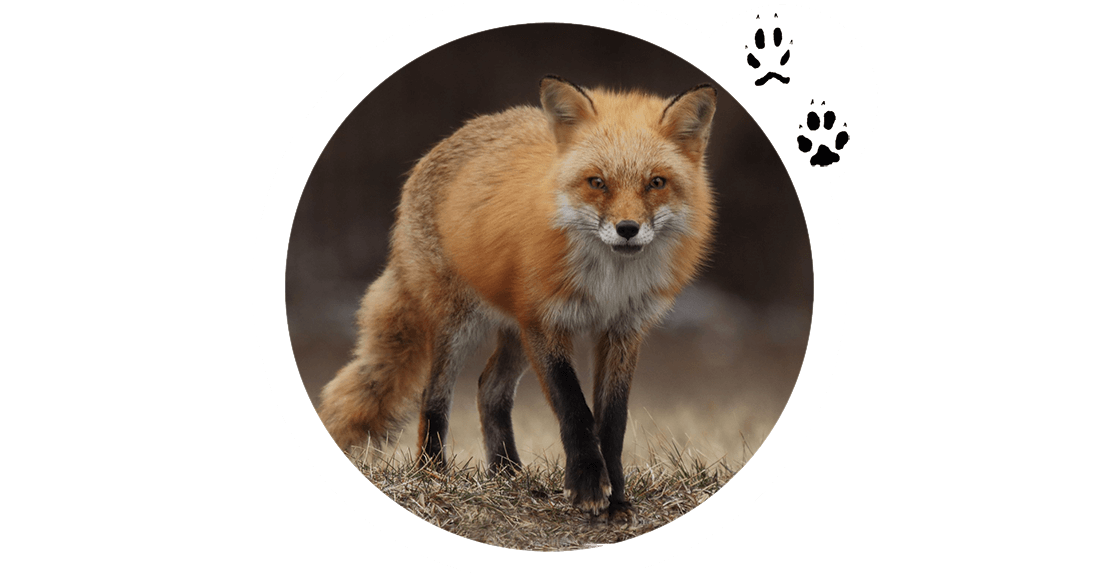
Foxes are small to medium-sized canines. They are about 2 to 4 feet long, including their bushy tail. Usually weigh between 6 to 24 pounds, depending on the species. Most common colors are red, gray, or arctic white. They have pointed ears, a long snout, and a fluffy tail. Foxes have slender bodies and short legs.
Range and preferred habitats
Foxes are found across a wide range of regions in North America. They thrive in diverse habitats such as forests, grasslands, and deserts. Known for their adaptability, foxes can also live in urban areas, including cities and suburbs.
Feeding habits, behaviors, and daily activity patterns
Foxes are omnivores, consuming both plants and animals. They hunt small prey such as mice, rabbits, and birds, but also feast on fruits, berries, and insects. Known for their agility, they often hunt alone and are skilled at pouncing on their prey. Most active at night (nocturnal) and during dawn and dusk, foxes are also incredibly clever and excel at problem-solving.
Tracks, droppings, calls, and other signs
Foxes exhibit distinct signs that help identify their presence in the wild. Their tracks are narrow, featuring four toes with visible claw marks, resembling those of a small dog. The droppings of a fox are typically tabular and may contain fur or bones, reflecting their carnivorous diet. In terms of vocalizations, foxes communicate through various sounds, including barks for alerts or greetings, high-pitched screams during mating season, and a chattering noise known as gekkering, often heard during territorial disputes. These signs help to understand fox behavior and their habitats.