Parts of a crossbow
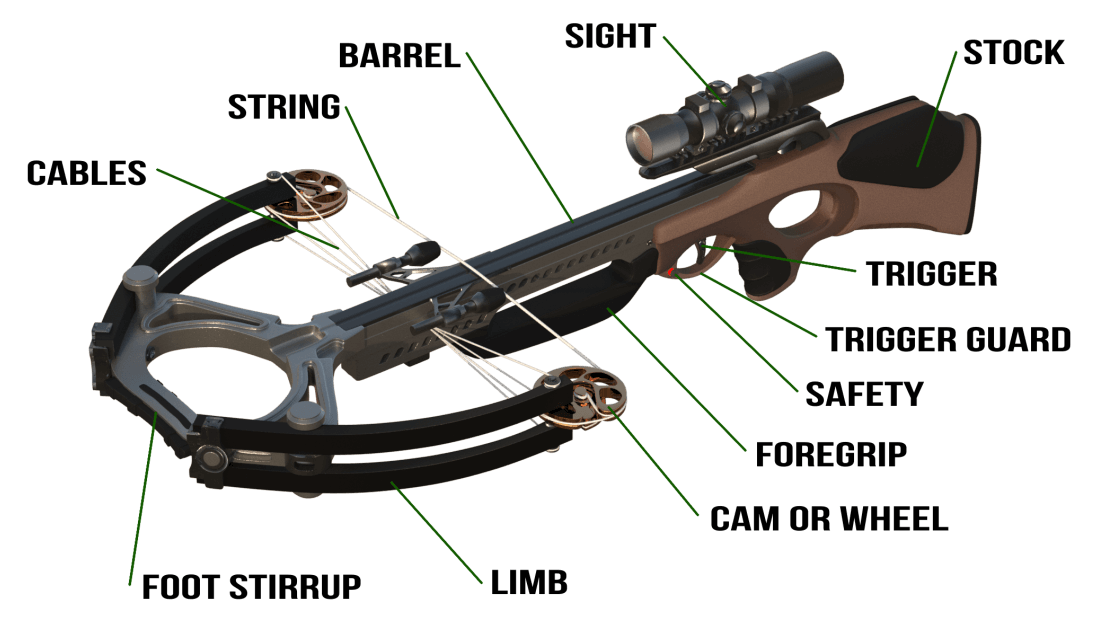
Stock (Body)
The main frame of the crossbow. It holds all components together and provides a stable structure to support aiming and handling.
Limbs
Flexible arms at the front of the crossbow that store energy when drawn. They release this energy to propel the bolt.
Riser
The central piece that the limbs attach to. It keeps the limbs aligned and stable.
String
The cord that connects the tips of the limbs. When released, it pushes the bolt forward.
Barrel / Track / Flight Deck
The top surface where the bolt rests. It guides the bolt straight when fired.
Trigger
A mechanical switch that releases the drawn string safely.
Trigger Guard
A protective loop around the trigger to prevent accidental contact.
Stirrup (Foot Stirrup)
A metal loop at the front used to stabilize the crossbow with your foot while drawing the string.
Safety
A built-in mechanism that prevents the trigger from releasing by mistake.
Scope / Sights
Optical or fixed aiming devices mounted on top to improve accuracy.
Arrow Retention Spring / Bolt Retainer
A small arm that holds the bolt securely in place on the barrel.
Cam System (on Compound Crossbows)
Oval wheels in compound models that increase efficiency and reduce draw weight.
Cables (Compound Crossbows)
Additional cords that connect the cams and help them rotate correctly.
Buttstock
The rear end of the crossbow that rests against the shoulder for stability.
Foregrip
A front grip area that helps hold the crossbow securely with the non-trigger hand.
Quiver
A holder that attaches to the crossbow and stores extra bolts safely.
Barrel Pass-Through / Hand Guard
A protective design element that keeps the user’s hand safely below the string path.
Rope cocking devices
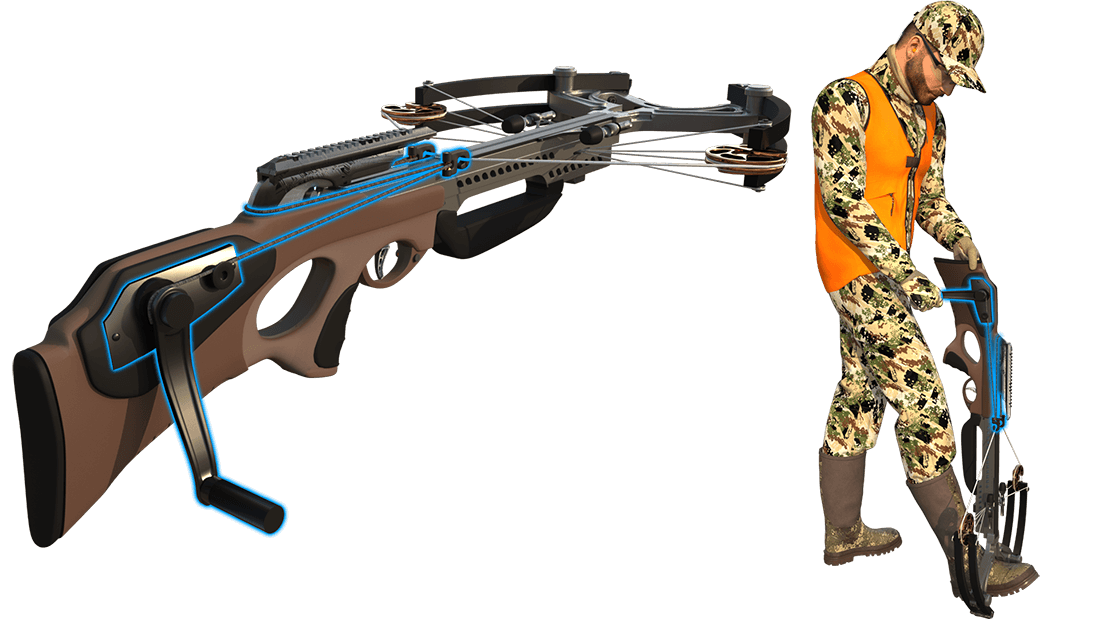
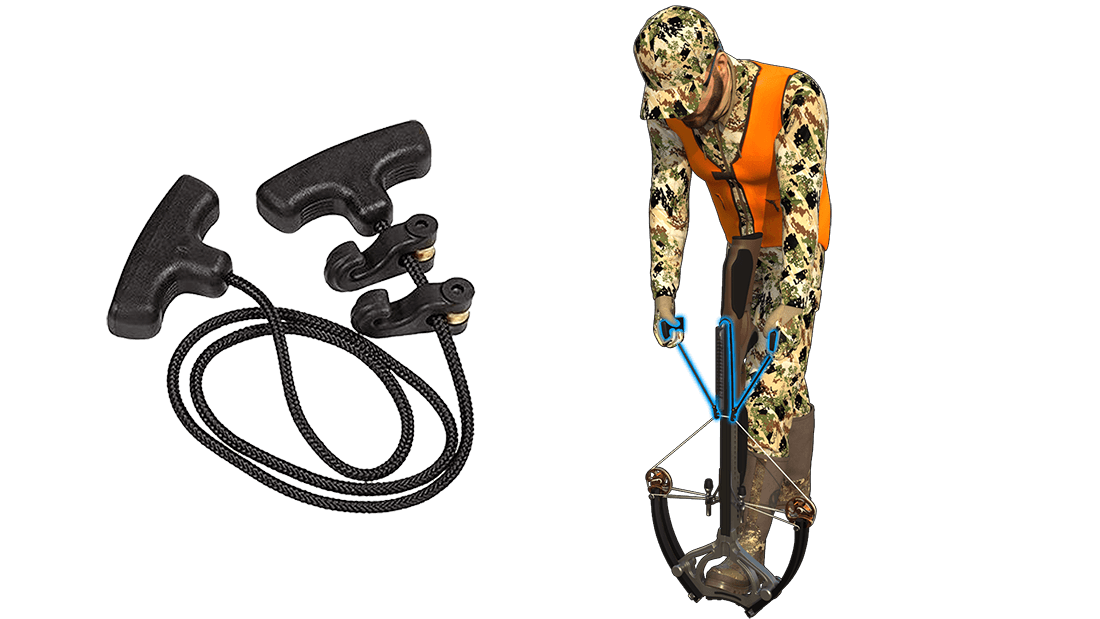
These are simple tools that use a rope and pulley system. They typically reduce the effort required to cock the crossbow by about 50%. The archer hooks the rope to the string and uses their body weight to draw the bow.
Cranks
These are more advanced mechanical systems attached to the crossbow. Cranks use gears to multiply the user's input force, making it much easier to cock high-poundage crossbows. They often allow for very precise and consistent drawing.