Furbearer species - Didelphidae - Castoridae - Cricetidae
Didelphidae - Opossum
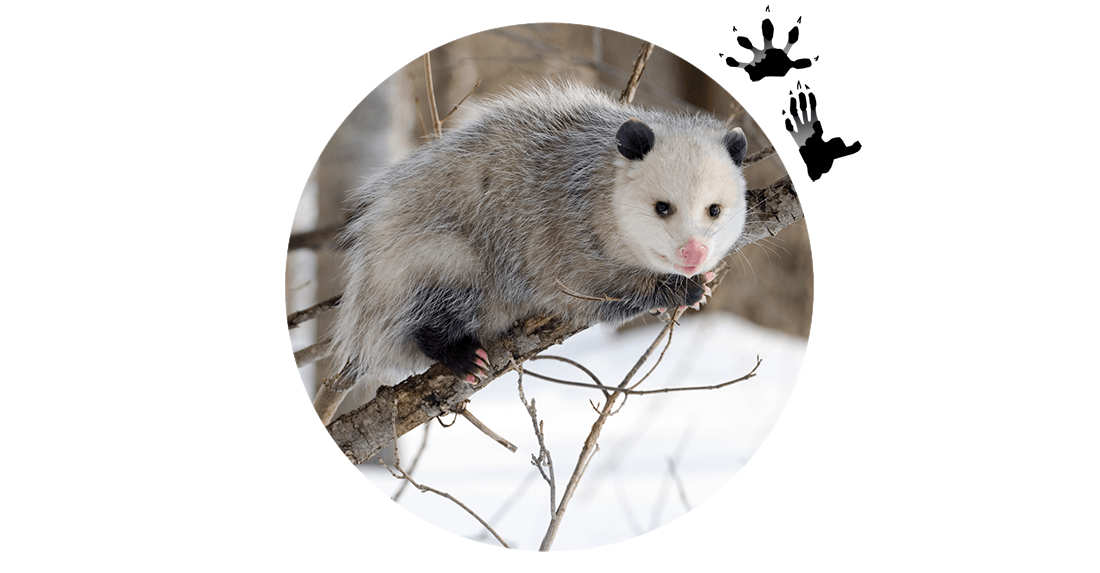
Opossums are about the size of a house cat. They are 2 to 3 feet long, including their tail. Usually weigh between 4 to 14 pounds. Their fur is grayish-white to black. They have a long, pointed face with a pink nose. Opossums have large, hairless ears. They have a long, scaly tail that can grab things.
Range and preferred habitats
Opossums are found in North America and are highly adaptable creatures capable of living in a variety of habitats. In the wild, they prefer areas with trees, water sources, and places to hide, such as forests, swamps, and marshes. However, they are also commonly found in suburban and urban environments, where they often scavenge for food near human settlements. Opossums often den in hollow trees, under buildings, or in abandoned burrows. They can also take refuge in places like sheds, garages, attics, or under porches, using these spots for shelter, especially during the day when they are not active.
Feeding habits, behaviors, and daily activity patterns
Opossums are opportunistic omnivores and will eat almost anything, including insects, small animals, fruits, and even garbage. They are nocturnal, most active at night, and are known for "playing dead" when threatened as a defense mechanism. Opossums are skilled climbers and swimmers. They are typically solitary animals, except when raising their young.
Tracks, droppings, calls, and other signs
Opossum tracks resemble tiny handprints, with five toes on each foot. Their droppings are typically dark and tubular in shape. When threatened, opossums hiss and growl to warn off predators, and they may make clicking or "choo-choo" sounds when communicating with others in the area. They often leave behind a musky scent as a sign of their presence.
Castoridae - Beaver
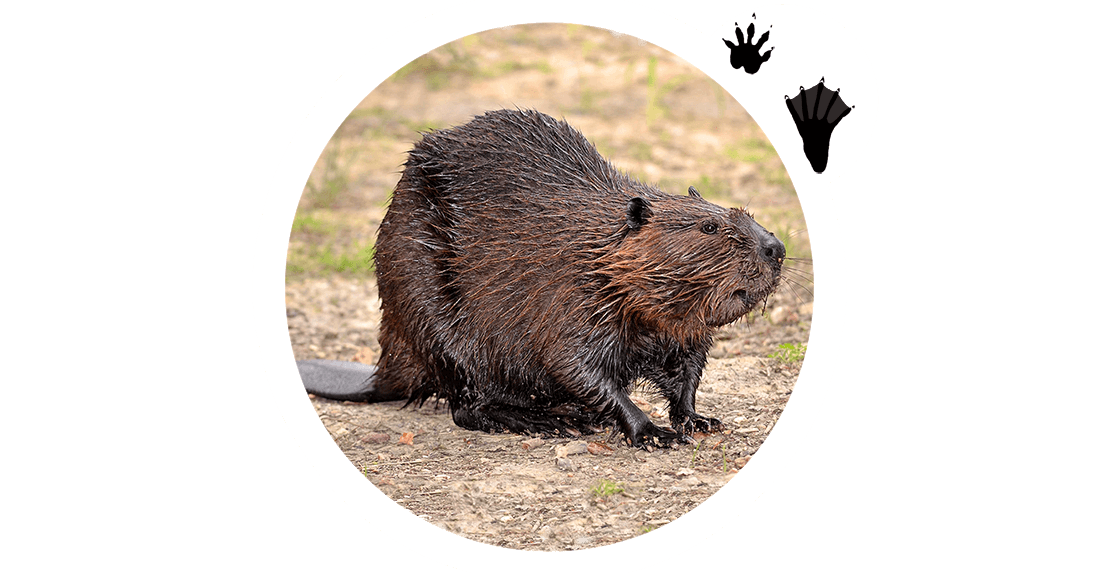
Beavers are large rodents. They are 3 to 4 feet long, including their tail. They weigh between 35 to 70 pounds. Their fur is usually brown and very thick to keep them warm and dry. Beavers have flat, wide tails that are scaly. They have webbed back feet and large, orange front teeth for chewing wood.
Range and preferred habitats
Beavers are found across North America. They thrive in freshwater environments such as rivers, streams, lakes, and ponds. Beavers are renowned for their engineering skills, building dams to create deep ponds that offer protection and stability. Within these ponds, they construct lodges made of sticks, mud, and other materials, providing them with shelter and a safe place to live.
Feeding habits, behaviors, and daily activity patterns
Beavers are herbivores with a diet that consists mainly of tree bark, leaves, twigs, and aquatic plants. They are most active during the early morning and evening hours, particularly at dawn and dusk. Known for their strong swimming abilities, beavers can hold their breath underwater for up to 15 minutes. They live in social groups called colonies, working together to build and maintain their impressive dams and lodges.
Tracks, droppings, calls, and other signs
Beaver tracks feature webbed hind feet and smaller front paws, often leaving distinct impressions along riverbanks or in mud. Their droppings are infrequently observed, as beavers tend to defecate in water. While not particularly vocal, beavers communicate through quiet sounds within their family group. Other signs of their presence include chewed trees with clear tooth marks, dome-shaped lodges, dams built across water, and well-worn trails leading from water to feeding areas. Beavers are also known to slap their tails on the surface of the water as a warning signal to others in the vicinity.
Cricetidae - Muskrat
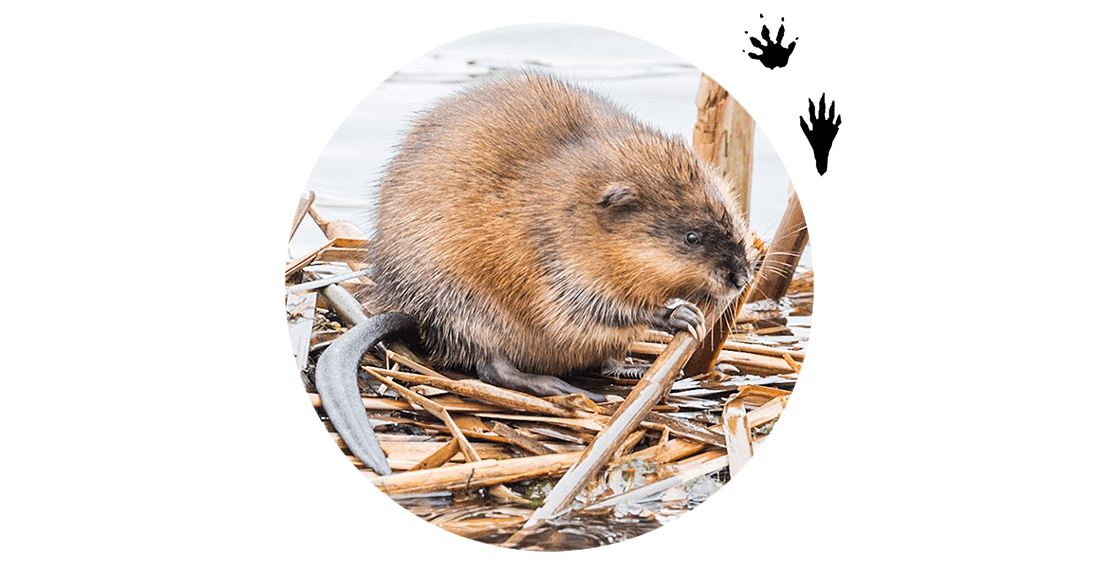
Muskrats are medium-sized rodents. They may be trapped but not hunted. They are about 1 to 2 feet long, including their tail. Usually weigh between 2 to 5 pounds. Their fur is dark brown and waterproof. They have a long, scaly tail that's flattened on the sides. Muskrats have small eyes and ears. They have webbed hind feet for swimming.
Range and preferred habitats
Muskrats are found across North America. They inhabit wetland areas such as ponds, marshes, and riverbanks. Muskrats build homes, known as lodges, made from plants, mud, and other materials found in their environment, which provide protection from predators and harsh weather.
Feeding habits, behaviors, and daily activity patterns
Muskrats are primarily herbivores, feeding on plants such as cattails, bulrushes, and other aquatic vegetation. While their diet mainly consists of plant material, they occasionally consume small animals like fish and frogs. They are most active at night and during the early morning hours. Muskrats are excellent swimmers and can hold their breath underwater for up to 15 minutes. They typically live in family groups, sharing the lodges they build from plants and mud.
Tracks, droppings, calls, and other signs
Muskrat tracks feature webbed hind feet and smaller front feet, often leaving distinctive imprints in the mud. Their droppings are dark, frequently found floating in water. Muskrats communicate with quiet chirping or squeaking sounds, especially when interacting with others in their family group. They build dome-shaped lodges made of vegetation and mud, typically in shallow water. Muskrats also mark their territory with a musky scent, leaving a distinctive odor behind as a warning to other muskrats.
