Furbearer species - Felidae - Ursidae - Procyonidae - Mephitidae
Felidae - Bobcat
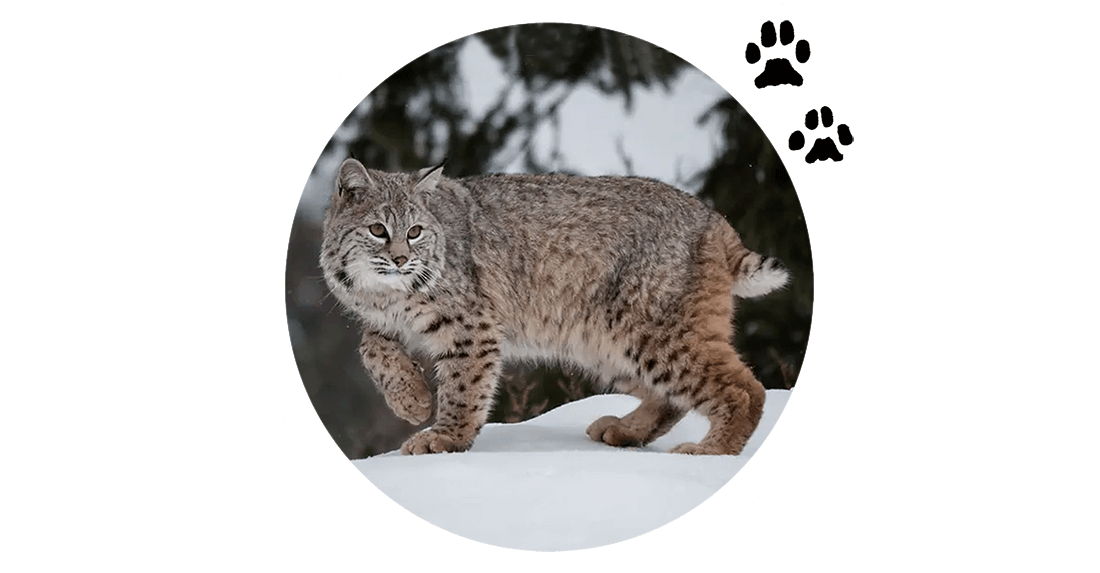
Bobcats are medium-sized wild cats. They are protected and may not be trapped. They are about 2 to 3 feet long. Usually weigh between 15 to 35 pounds. Their fur is usually reddish-brown with black spots. They have tufted ears and a short, "bobbed" tail. Bobcats have powerful legs and sharp claws.
Range and preferred habitats
Bobcats are found across North America, from forests and swamps to semi-deserts. They are also capable of thriving at the edges of urban areas, where they use natural cover to stay hidden. Bobcats favor environments with plenty of concealment, such as dense vegetation or rocky terrain, providing them with ample hiding spots.
Feeding habits, behaviors, and daily activity patterns
Bobcats are carnivores, preying on small animals such as rabbits, birds, and mice. When food is scarce, they may even hunt deer. Most active at dawn and dusk, bobcats are skilled climbers and can leap great distances. They typically hunt alone and are known for their stealth and silence.
Tracks, droppings, calls, and other signs
Bobcat tracks resemble cat prints but are larger, measuring about 1.5 to 2 inches wide. Their droppings are tubular and often contain fur and bone fragments. Known for their loud yowling or growling, bobcats vocalize during the breeding season to establish territory or attract mates. Other signs of their presence include scratch marks on trees. Bobcats also mark their territory with urine and scratch marks.
Ursidae - Bear
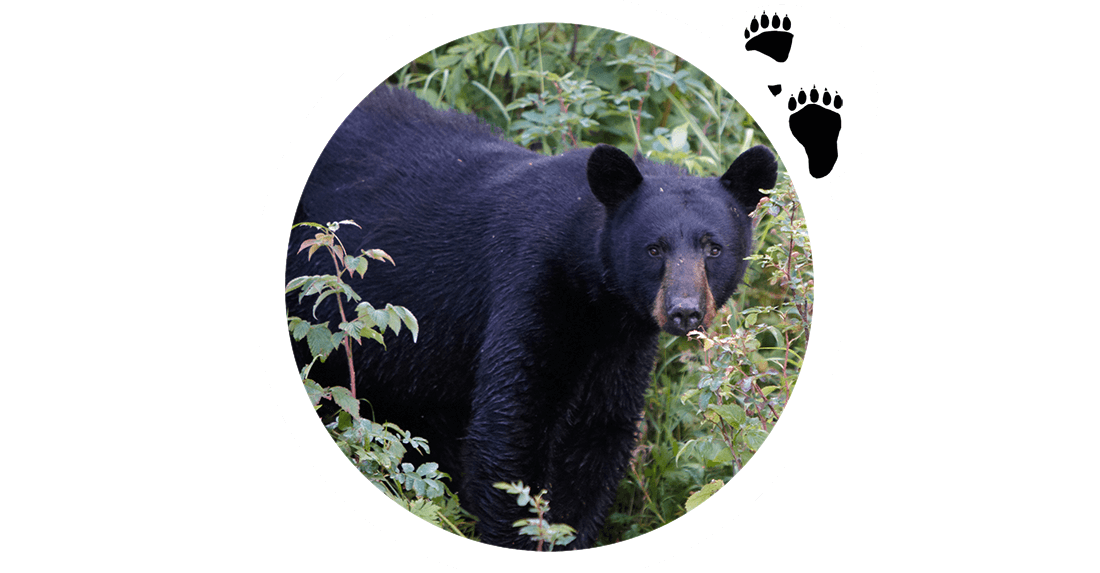
Bears are large, powerful mammals. Size varies by species, from 4 to 8 feet long. Weight ranges from 200 to over 1,000 pounds. Colors include black, brown, white, or cinnamon. They have thick fur and a short tail. Bears have round ears and a long snout. They have strong claws for digging and climbing.
Range and preferred habitats
Bears are found across North America. You can find species like the grizzly, black bear and brown bear in forests, mountains, and swamps. Their habitats vary by species, but common environments include forests, mountains, and northern latitudes, where they have access to ample food sources and cover.
Feeding habits, behaviors, and daily activity patterns
Most bears are omnivores, feeding on a variety of foods such as berries, nuts, fish, insects, and occasionally larger animals. They are typically active during dawn and dusk. To conserve energy during the winter when food is scarce, most bears, including black bears and grizzly bears, hibernate. However, polar bears do not hibernate in the same way as other species. Bears are usually solitary, except for mothers with their cubs. They are also skilled climbers and swimmers.
Tracks, droppings, calls, and other signs
Bear tracks typically show five toes and can be quite large, reaching up to 12 inches in length. Their droppings are sizable and can vary depending on their diet. Bears communicate using a range of sounds, including grunts, growls, and roars. They often leave claw marks on trees and can be spotted leaving trails through dense vegetation as they move through their habitats.
Procyonidae - Raccoon
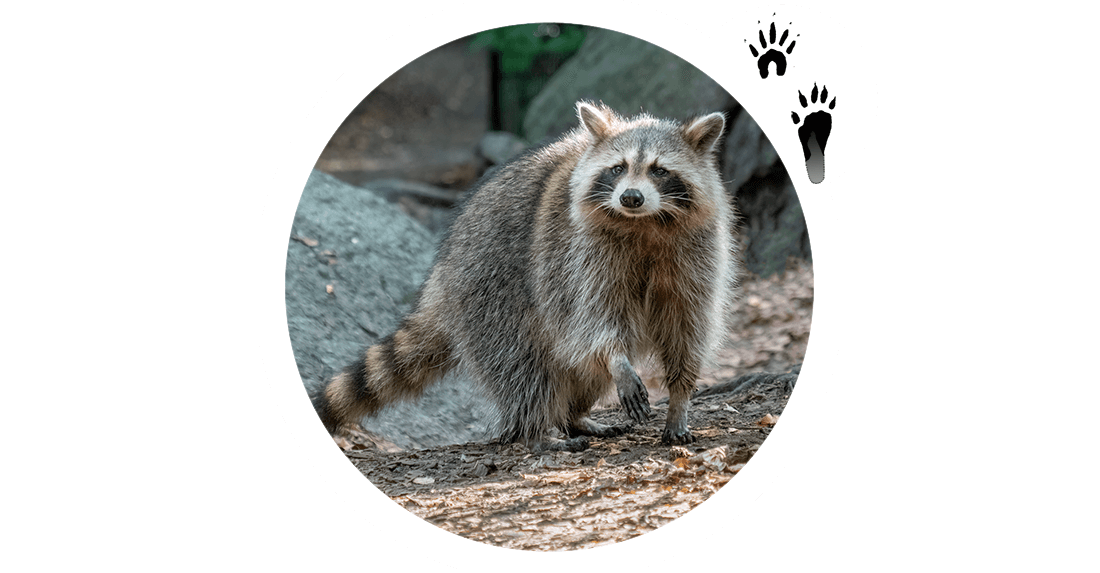
Raccoons are medium-sized mammals. They are about 2 to 3 feet long, including their bushy tail. Usually weigh between 10 to 30 pounds. Have grayish-brown fur with a black "mask" around their eyes. Their tails have 5-10 black rings. Raccoons have five toes on each foot with sharp claws.
Range and preferred habitats
Raccoons are native to North America. They are highly adaptable and can be found in a variety of habitats, including forests, grasslands, and areas near water such as rivers, lakes, and wetlands. Raccoons are also well-suited to urban and suburban environments, where they often thrive alongside human activity.
Feeding habits, behaviors, and daily activity patterns
Raccoons are omnivores, feeding on a wide range of foods including fruits, nuts, insects, small animals, and even garbage. They are famously known for "washing" their food in water before eating. Primarily nocturnal, raccoons are excellent climbers and swimmers. They often live in groups called nurseries, especially during the breeding season.
Tracks, droppings, calls, and other signs
Raccoon tracks resemble small handprints, typically around 2 inches long. Their droppings are tubular and often contain visible food remnants. Raccoons communicate through various sounds, such as chittering when content, or growling, barking, or even screaming when stressed or threatened. They frequently use "latrine sites" where multiple raccoons leave droppings to mark their territory. Additionally, raccoons often leave scratch marks on trees or the sides of buildings as they climb.
Mephitidae - Skunk
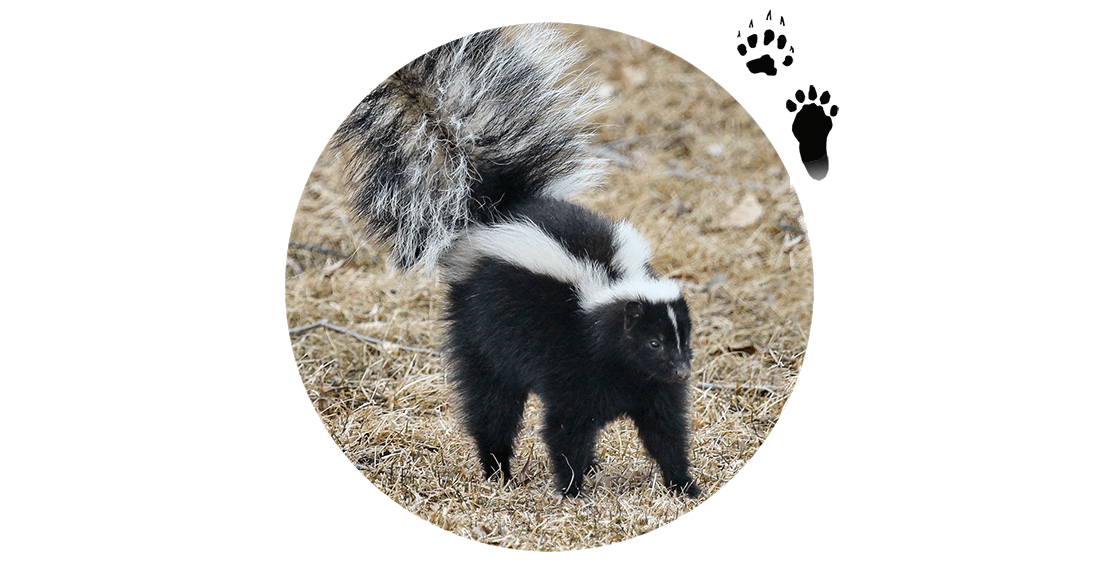
Skunks are small to medium-sized mammals. They are about 1 to 3 feet long, including their tail. Usually weigh between 6 to 14 pounds. Most have black fur with white stripes or spots. They have a large, bushy tail. Skunks have small heads with a pointed snout. They have strong claws for digging.
Range and preferred habitats
Skunks are found primarily in North America. These adaptable animals thrive in a wide range of habitats, from wild, wooded areas to urban and suburban environments. In natural settings, skunks typically occupy burrows, dens, and hollowed-out spaces under logs or trees. They are also known to take over abandoned burrows previously dug by other animals, such as woodchucks or rabbits. Due to their natural curiosity, skunks are often drawn to areas with abundant food and shelter, which is why they are commonly found near human habitation.
Feeding habits, behaviors, and daily activity patterns
Skunks are omnivores, feeding on a variety of foods including insects, small animals, fruits, and nuts. They are primarily nocturnal, being most active at night. When threatened, skunks are famous for spraying a strong-smelling liquid as a defense mechanism. Typically slow-moving and not aggressive, skunks prefer to avoid confrontation. They usually live alone, except during the mating season.
Tracks, droppings, calls, and other signs
Skunk tracks show five toes on each foot and measure about 1-2 inches long. Their droppings are tubular and often contain insect parts. Skunks communicate with a variety of sounds—when threatened, they hiss or growl, but they also make chirping or chattering noises during mating or social interactions. They are known to dig small, cone-shaped holes in lawns while searching for grubs. Skunks often take refuge in abandoned burrows or create dens under buildings for shelter.
