Furbearer species - Mustelidae
Badger

Badgers are stocky, muscular members of the weasel family. They are about 2 to 3 feet long, including their short tail. They usually weigh between 15 to 25 pounds. Their fur is grayish with distinctive black and white markings on the face. They have small ears, a short snout, and small eyes. Badgers have a broad, flat body and short, powerful legs with long claws.
Range and preferred habitats
Badgers are native to North America. They thrive in open grasslands, prairies, and forest edges, where they prefer areas with plenty of ground cover and suitable digging sites. Their adaptability allows them to inhabit a wide range of environments across North America.
Feeding habits, behaviors, and daily activity patterns
Badgers are primarily carnivores but also consume a variety of plant matter. They hunt small mammals such as ground squirrels, prairie dogs, and rabbits, and also feed on insects, birds, eggs, and occasionally fruits and plants. Known for their solitary nature, badgers are excellent diggers, using their powerful claws to excavate burrows or capture prey. While they are most active at night, badgers can also be seen during daylight hours. Their tenacity and strength are notable, particularly when defending themselves or digging through tough soil.
Tracks, droppings, calls, and other signs
Badger tracks feature five toes with long claw marks, typically arranged in a distinctive waddling pattern. Their droppings are elongated, often containing fur and bone fragments. Badgers produce a range of vocalizations, including growls, snarls, and occasional purring sounds. They are known for digging extensive burrows with multiple entrances, which are marked by characteristic mounds of dirt.
Fisher
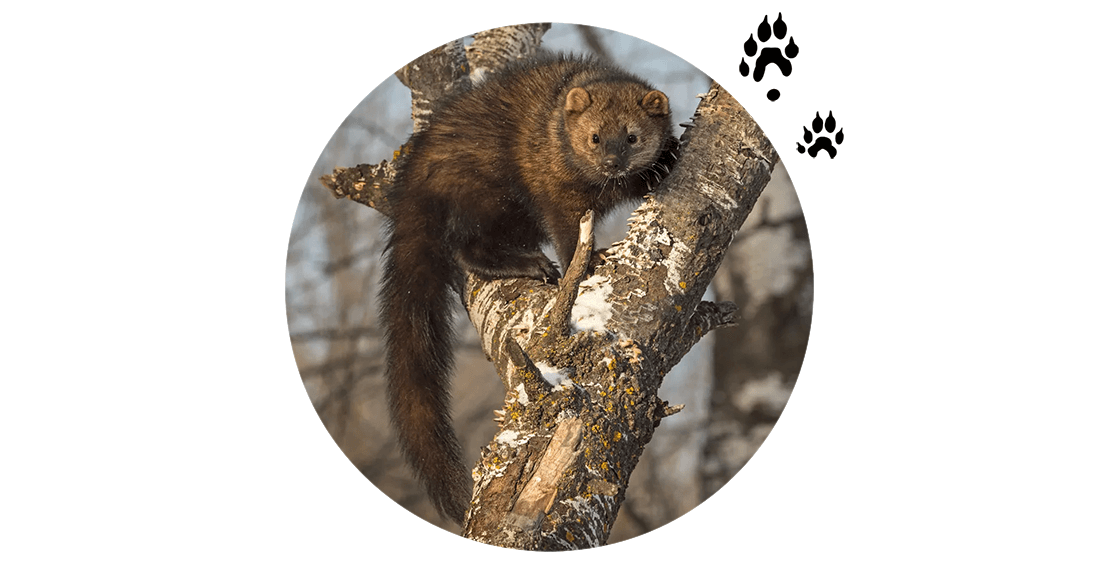
Fishers are medium-sized members of the weasel family. They are about 3 to 3.5 feet long, including their bushy tail. They usually weigh between 4 to 13 pounds, with males being larger than females. Their fur is dark brown to nearly black, often with a grizzled appearance. They have rounded ears, a pointed snout, and dark eyes. Fishers have a long, muscular body and short legs.
Range and preferred habitats
Fishers are native to northern North America, including Canada and the northern United States, where they primarily inhabit mature coniferous and mixed forests with dense canopy cover. They prefer areas with plenty of trees and cover to provide shelter and hunting opportunities.
Feeding habits, behaviors, and daily activity patterns
Fishers are carnivorous predators with a diverse diet. They hunt small mammals such as snowshoe hares, squirrels, and porcupines, but also feed on birds, fish, and occasionally fruits and berries. Fishers are solitary hunters and highly skilled climbers, often navigating trees with remarkable agility. Though they are most active at dawn and dusk, they can hunt at any time of day. Known for their speed and dexterity both in trees and on the ground, they are formidable and efficient predators.
Tracks, droppings, calls, and other signs
Fisher tracks typically display five toes and are often found in a distinct, bounding pattern. Their droppings are long, twisted, and frequently contain fur, bone fragments, and other remnants of their prey. Fishers are known for their wide range of vocalizations, including high-pitched screams, guttural growls, and even chuckles. They often seek shelter in hollow trees, fallen logs, or rock crevices, using these natural features as dens for rest or rearing their young.
Otter

Otters are sleek, long-bodied mammals. They are about 3 to 4 feet long, including their tail. Usually weigh between 10 to 30 pounds. Their fur is brown and very dense, keeping them warm in water. They have a broad, flat head with small ears. Otters have webbed feet and a long, strong tail.
Range and preferred habitats
Otters are found in North America and Europe. They live in aquatic environments such as rivers, lakes, and coastal areas. Otters prefer clean, well-oxygenated water with abundant fish and other aquatic creatures.
Feeding habits, behaviors, and daily activity patterns
Otters are primarily carnivores, feeding on fish, crayfish, frogs, and occasionally small mammals. They are highly social animals, often seen playing and interacting with one another. Active mostly during early morning and late afternoon, otters are skilled swimmers, able to stay underwater for several minutes. They typically live in family groups, using dens along riverbanks or in hollowed-out logs.
Tracks, droppings, calls, and other signs
Otter tracks feature webbed feet, typically 2-3 inches long. Their droppings, known as spraint, often contain fish scales and bones. Otters communicate with various sounds, including whistles and chirps. They are known to slide along muddy or snowy banks, leaving distinctive trails. To mark their territory, otters deposit scent and droppings on prominent spots along their waterways.
Marten
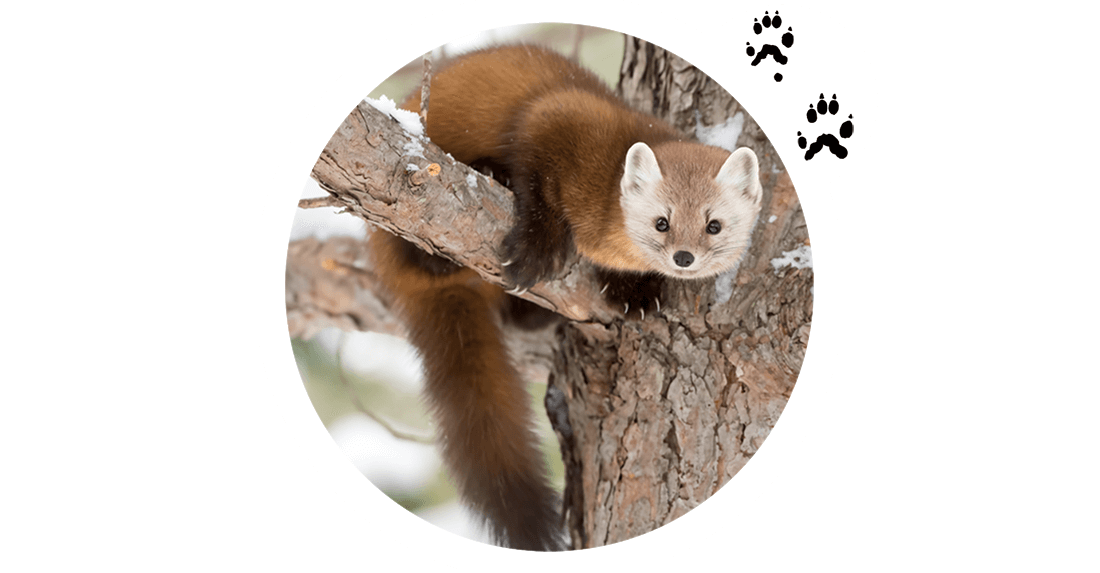
Martens are small, slender members of the weasel family. They are protected and may not be trapped. They are about 1,5 to 2,5 feet long, including their bushy tail. Usually weigh between 1 to 3 pounds. Their fur is usually brown with a lighter patch on the throat. They have large, rounded ears. Martens have sharp, retractable claws and a long, flexible body.
Range and preferred habitats
Martens are found in North America. They live mainly in forests and prefer areas with abundant trees and ground cover, which provide both shelter and food.
Feeding habits, behaviors, and daily activity patterns
Martens are carnivores, primarily hunting small mammals such as voles, mice, and squirrels. They also eat birds, insects, and berries. Most active at dawn and dusk, martens are excellent climbers and can jump between trees with ease. They are usually solitary animals, preferring to hunt and live alone.
Tracks, droppings, calls, and other signs
Marten tracks show five toes and are typically about 1.5 inches long. Their droppings are long and thin, often containing fur and bone fragments. Martens communicate using a range of sounds, including huffs, chuckles, and shouts. They often leave claw marks on trees and commonly use tree cavities or rock crevices as dens for shelter.
Weasel

Weasels are small, slender carnivorous mammals. They are characterized by their elongated bodies, short legs, and sharp teeth. Typically measuring between 7 to 14 inches in length, including their short tails. Weasels usually weigh between 3 to 12 ounces. Their fur is often brown on the back and white on the belly, with some species exhibiting seasonal color changes, turning all-white in winter.
Range and preferred habitats
Weasels inhabit a variety of environments, including forests, grasslands, and agricultural areas. They are widely distributed across North America.
Feeding habits, behaviors, and daily activity patterns
Weasels are primarily carnivorous, preying on small mammals such as mice, voles, and rabbits. They also consume birds, eggs, and insects. Typically solitary hunters, weasels are known for their agility and speed. They can be active both day and night but tend to be more nocturnal.
Tracks, droppings, calls, and other signs
Weasel tracks show five toes with claw marks and often appear in a bounding pattern. Their droppings are thin and twisted, frequently containing fur and bone fragments from their prey. Weasels communicate using various vocalizations such as trills and squeaks. They often use abandoned burrows or natural cavities for dens.
Mink

Minks are small, sleek members of the weasel family. They are protected and may not be trapped. They are about 1 to 2 feet long, including their tail. Usually weigh between 1 to 3 pounds. Their fur is dark brown to black, often with a white chin patch. They have a long, thin body and short legs. Minks have small, round ears and pointed snouts. They have slightly webbed toes for swimming.
Range and preferred habitats
Minks are found across North America. They live near freshwater sources such as rivers, streams, and wetlands. Minks prefer habitats with ample cover, such as dense vegetation, rocks, or fallen logs, providing shelter and hunting opportunities.
Feeding habits, behaviors, and daily activity patterns
Minks are carnivores, preying on fish, frogs, birds, and small mammals. They are most active during the night and early morning hours. Minks are excellent swimmers and can dive underwater to catch their prey. They typically live alone, except during the mating season. Despite their small size, they are known for being fierce and skilled hunters.
Tracks, droppings, calls, and other signs
Mink tracks typically display five toes and measure around 1 to 2 inches in length. Their droppings are dark, twisted, and often contain fur, bones, or other remains of their prey. Minks communicate with a variety of sounds, including distinctive chirps and growls. They are known to slide gracefully across muddy banks in search of food. For shelter, minks often take refuge in hollow logs, abandoned burrows, or dens along the water's edge.
