Methods for skinning game animals
For most animals with fur, the first step is skinning. There are two main ways to do this:
- Case skinning
- Open skinning
Choosing the right method depends on the type of animal and what the fur will be used for.
Case skinning
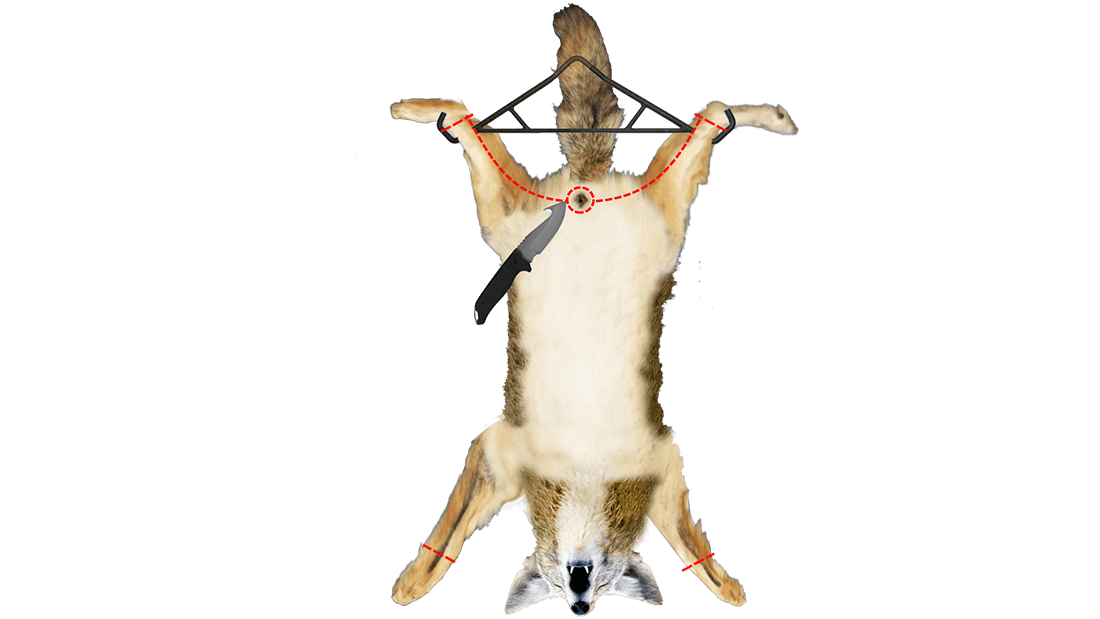
The case skinning method is applicable for all pelts except for beavers. With this technique, the pelt is taken off like a sock. You start at the hind legs and carefully work your way up toward the head. This method helps keep the fur in good condition and makes it easier to prepare for sale.

Skinning techniques vary depending on the animal's size and species. For larger animals, using a gambrel to hang the carcass facilitates easier skinning. This method allows for better access and control during the process.
Smaller furbearers like muskrats and minks are best skinned on a table, providing a stable surface for precise work. When skinning a muskrat, begin by cutting the skin around the tail.
For fur-tailed furbearers, such as foxes or raccoons, the tail is split and skinned out separately. This careful process preserves the valuable fur on the tail.
Proper skinning technique is crucial for maintaining pelt quality. It requires practice and attention to detail to avoid damaging the fur or hide.
Open skinning
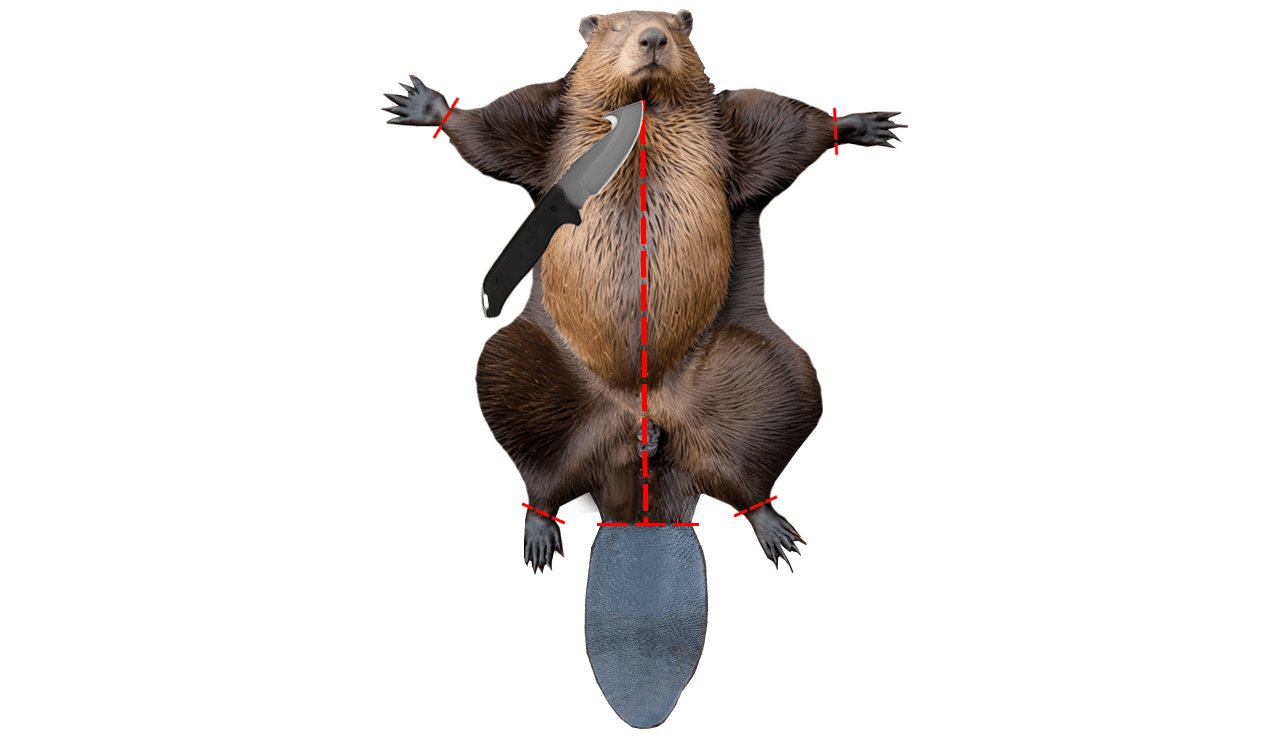
Open skinning is used only for beavers where the pelt is cut along the belly and spread flat. Use sharp knives and take care not to cut the hide or damage the fur.
